After a long summer season, many of us look forward to a relaxing and cozy winter season. Unfortunately, one part of the winter that many of us wish we could ignore is our high heating costs. While you can’t eliminate your costs, there are some smart upgrades you can get for your home to lower those bills so they better fit within your budget.
Smart Thermostat
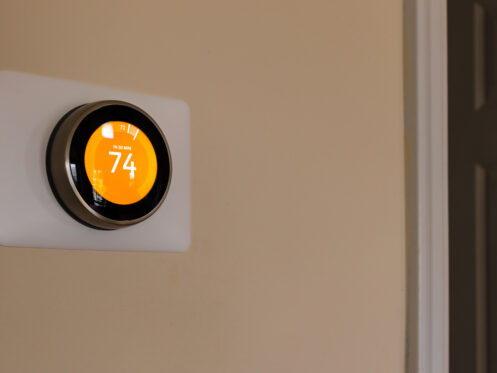
Probably one of the easiest upgrades you can get for your home is a smart thermostat. Many smart thermostats offer features like automatic temperature adjustments, geofencing, app-based control, and even energy usage tracking.
These can help you save money in a variety of ways. One of the most basic is that it can automatically adjust your temperature to a lower setting when your phone’s GPS location shows you’ve left home. This saves you the hassle of having to remember to turn the temperature down whenever you leave.
It will even increase your temperature setting when you’re on your way back so your home is comfortable when you arrive. Furthermore, a smart thermostat allows you to monitor your energy usage, so you can plan adjustments and see in real time how they impact your bills.
Smart Vents and Radiator Valves
If your home experiences uneven temperatures throughout the winter, smart vents can be a helpful option. These devices can rebalance airflow and improve comfort in cooler rooms, minimizing wasted energy. They’re particularly useful in two-story homes where the upstairs tends to stay warmer than the downstairs.
Instead of overheating rooms that are already comfortable, smart vents can help redirect airflow to cooler rooms. However, they don’t increase your furnace’s total heating output and should be used carefully to avoid excess duct pressure.
If you rely on a boiler system with radiators, you can achieve similar benefits with smart radiator valves. These allow you to control individual radiators so heat is only delivered to the rooms that need it.
Smart Window and Door Sensors
There’s nothing more frustrating than realizing you’re running your heating system while a window or door is open. Smart door and window sensors can detect when this happens. When integrated through a smart home hub, they can send alerts to your phone and, in some systems, even signal your HVAC to pause heating until the opening is closed.
Smart Shades and Curtains
Smart shades and curtains automatically open or close based on outdoor conditions. For example, they’ll open during the daytime to let in free solar heat and close at night to retain warmth. This simple automation can reduce heat loss through windows and lower your heating bills.
Smart Ceiling Fans
Ceiling fans are useful year-round. In the winter, running a fan at low speed in a clockwise direction helps push warm air from the ceiling back down into the living space. Smart ceiling fans add convenience by automatically turning on when you’re in the room. This doesn’t replace heating but helps distribute warm air more evenly, reducing how often your system cycles.
Smart Humidification System
Winter air is often dry, and dry air can make you feel colder at normal room temperatures. A smart humidification system integrated into your HVAC can add moisture to the air, helping it feel warmer at a lower thermostat setting. This may allow you to reduce heating usage while staying comfortable.
Other Helpful Tips
Apart from integrating smart technologies, there are additional tactics you can use to reduce heating costs. One of the most important is scheduling routine maintenance for your heating system. Annual professional service is necessary to maintain warranty coverage and ensure maximum efficiency.
Check your air filter monthly and replace it when needed to keep airflow strong. Consider duct cleaning if you notice visible dust, mold, or reduced airflow. Taking the time to seal air leaks around windows and doors can also reduce heat loss and improve efficiency.
It’s helpful to understand the expected lifespan of your heating system so you can plan ahead. Furnaces typically last 15–20 years, boilers 15–25 years, and heat pumps 10–15 years. If your system is over 15 years old and showing signs of inefficiency or frequent repairs, upgrading to a modern high-efficiency model could save you money in the long run.
Don’t forget to check your attic insulation. If insulation sits below the joists, add more until you reach recommended R-values for your region (R-38 to R-60 in colder climates). Proper insulation reduces heat loss and keeps your system from working harder than it needs to.
Expert Heating Maintenance Service
AJ Danboise Plumbing, Heating, Cooling & Electrical offers expert heating maintenance service for the Farmington Hills, MI area. We can also assist with all your heating installation, replacement, and repair needs. Call our office today to schedule your next service consultation.