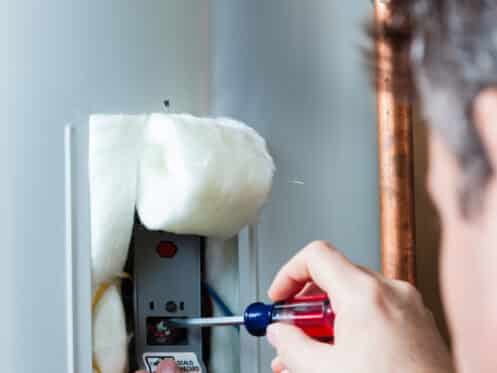
Hearing your water heater suddenly start making unusual sounds can be frightening and may lead you to think the unit is about to fail. A banging, popping, or rumbling sound may make you worry that the tank is at risk of rupturing or exploding due to high pressure. While there’s a slight possibility this could be the case, these sounds usually result from “kettling” caused by sediment buildup inside the tank. Although sediment buildup isn’t necessarily a major concern, it can shorten your water heater’s lifespan and lead to higher energy bills.
How Sediment Can Cause Kettling and Unusual Noises
All water contains some amount of minerals and other impurities, which normally remain dissolved and suspended within the water. When water is heated inside the tank, a chemical reaction occurs that causes some of these minerals to harden into sediment that settles at the bottom. Over time, the sediment can form a solid layer that traps a small amount of water between it and the bottom of the tank. When the gas burner turns on, the trapped water quickly begins to boil, producing bubbles that rise through the sediment.
This boiling action creates a rumbling sound similar to what you hear when boiling water in a kettle. The bubbles can also disturb pieces of sediment, resulting in popping noises, or cause sediment to hit against the sides of the tank, producing loud knocking or banging sounds.
Why Sediment Buildup Is a Concern
Sediment buildup can cause numerous issues, especially in gas water heaters. One of the biggest concerns is that sediment absorbs a large amount of heat from the burner. This results in hot spots forming at the bottom of the tank, which weaken the steel over time and can eventually cause the tank to leak. If the tank becomes weak and heavily rusted, there’s a risk it could burst and cause significant flooding and water damage.
The heat-trapping effect of sediment also reduces the water heater’s efficiency. It causes the unit to heat more slowly, resulting in longer run times and increased energy usage. These extended heating cycles lead to added wear and tear, which can shorten the unit’s lifespan or result in more frequent repairs.
In some cases, excessive sediment buildup can significantly reduce the amount of water the tank can hold. This means you may start running out of hot water sooner and need to wait 30 minutes to an hour before hot water is available again. This issue is especially common in homes with hard water. The harder the water, the more minerals it contains, and the more sediment forms inside the tank.
The Importance of Flushing Your Water Heater
To avoid issues with sediment buildup, you should drain and fully flush your water heater once or twice a year. Once a year is usually sufficient if you have soft water. If your water is especially hard, flushing every six months is recommended. Flushing removes most of the sediment, improving performance and helping prevent future problems.
You can flush your water heater yourself or have a plumber do it as part of your annual water heater maintenance. To flush the tank, connect a hose to the drain valve and open the valve to allow water to drain. As the tank drains, cold water will continue flowing in to help flush out sediment. Continue flushing until the water runs clear and free of debris. Before starting, turn the water heater off and allow the water to cool to avoid the risk of scalding.
How to Prevent Sediment Buildup
There are several steps you can take to reduce or prevent sediment buildup inside your water heater. If you have hard water, investing in a water softener is a smart option. Water softeners remove dissolved minerals from the water and replace them with a small amount of sodium or potassium. This prevents sediment from forming in your water heater and also protects your plumbing and appliances from limescale buildup.
You should also keep your water heater set to 120 degrees Fahrenheit, or no higher than 130 degrees. Higher temperatures cause more minerals to separate from the water and form sediment. Maintaining a temperature between 120 and 130 degrees improves energy efficiency, reduces wear and tear, and can help extend the unit’s lifespan.
Is Sediment Buildup a Concern for Tankless Water Heaters?
Tankless water heaters don’t experience sediment buildup in the same way since they heat water on demand instead of storing it. However, minerals in the water supply can still cause problems. Over time, mineral deposits and limescale can accumulate on the heat exchanger and within the unit’s pipes. This buildup reduces heating efficiency and performance, and in severe cases, the water may never reach the desired temperature.
If limescale buildup becomes extensive, the only solutions may be replacing the heat exchanger or installing a new unit entirely. Due to the cost and complexity of heat exchanger replacement, many homeowners choose to replace the water heater instead.
The best way to prevent mineral and limescale issues in a tankless water heater is regular descaling. This process involves connecting hoses to the cold-water inlet and hot water outlet and using a pump to circulate a descaling solution through the unit. While this can be done yourself, it requires specialized equipment. The exact steps vary by brand and model, so always consult the owner’s manual for instructions.
For dependable water heater services in Farmington Hills and the surrounding areas, trust the experts at AJ Danboise Plumbing, Heating, Cooling & Electrical. Our fourth-generation, family-owned business has been serving Michigan homeowners since 1925. We service and install traditional and tankless water heaters, and our flat-rate, upfront pricing ensures honest, reliable service. Contact us today to schedule water heater service for your home.