
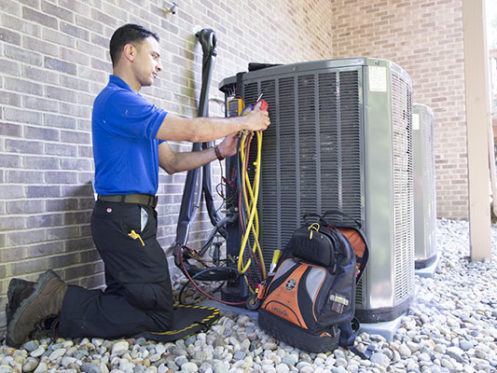
Avoid the mistake of waiting for problems to schedule HVAC maintenance. Many HVAC professionals recommend a proactive approach through regular cooling and heating tune-ups. There are many benefits to tune-ups, including improved energy efficiency that can lower your energy bills and environmental impact.
Household Carbon Footprint
The average U.S. household generates approximately 48 metric tons of annual CO2-equivalent emissions. Heating and air conditioning together account for a major share of household energy use, more than half on average in the U.S. Homes such as single-family houses also tend to use more energy than apartments. Cooling is a meaningful contributor to global emissions, with air conditioning and fans estimated to account for about 3% of global carbon emissions.
Higher Efficiency Equals Lower Energy Bills
Suboptimal HVAC energy efficiency can significantly affect your household operating costs. The U.S. Department of Energy notes that replacing a clogged HVAC filter can lower a system’s energy use by about 5% to 15%. Dirty coils can also drive up energy use; DOE guidance often cites that a dirty condenser coil can increase compressor energy consumption by around 30%. With fuel-fired equipment, soot and carbon deposits on burners and heat-exchanger surfaces can reduce performance and efficiency and may increase the risk of unsafe operation.
Regular HVAC Maintenance
A common recommendation is to schedule at least two maintenance appointments a year. Book a cooling tune-up early every spring and a heating tune-up early every fall. Even with routine maintenance, monitor for potential comfort and performance issues. That includes tracking your energy usage month to month and year to year. Schedule diagnostics at the earliest signs of a problem, including:
- Unusual noises
- Irregular system cycling
- Uneven cooling or heating
- High or low humidity levels
- Sudden spike in energy usage
Every several years, you may consider a duct inspection, especially in older homes or homes with comfort issues. Some households benefit from professional duct cleaning on an as-needed basis (for example, after major renovations or if there’s verified contamination). Ducts can also develop leaks over time, which can meaningfully undermine efficiency. ENERGY STAR notes that in a typical home, about 20% to 30% of the air moving through the duct system can be lost due to leaks, holes, and poor connections. Leakage can sometimes be addressed through duct sealing and other duct repair techniques.
What’s Included in a Seasonal HVAC Tune-Up?
A standard HVAC tune-up includes a season-specific multipoint inspection. It also includes a comprehensive cleaning of the relevant equipment and correction of any normal wear and tear. For all heating and cooling systems, these services extend to the:
- HVAC filter
- Air handler
- Thermostat
- Electrical components
For air conditioners and heat pumps, it also extends to the:
- Condenser coil
- Evaporator coil
- Condensate drain line
- Compressor and compressor fan
For fuel-fired furnaces and boilers, it includes the:
- Gas valve
- Burners
- Exhaust system
- Combustion chamber
- Pilot light or electronic ignition system
Boiler systems also require additional maintenance similar to water heaters. These tasks can include flushing (when applicable) and, for tank-style water heaters, periodic anode rod inspection/replacement.
HVAC Maintenance Helps Maintain Optimal Operating Efficiency
Air conditioners and heat pumps use a refrigeration process to move heat energy from one space to another. The evaporator coil and condenser coil are integral to this process. They can build up grime over time that acts like insulation. That makes the exchange of heat less efficient and can cause your electric bills to go up.
Something similar can happen with fuel-burning furnaces and boilers. Many older “standard efficiency” furnaces operate around 80% AFUE, while high-efficiency models are commonly 90%+ AFUE. If combustion components become dirty or poorly adjusted, performance and efficiency can drop and unsafe conditions (including elevated CO risk) can become more likely—another reason seasonal inspection is important.
It Can Also Stave Off Permanent Efficiency Losses as a System Ages
Ongoing maintenance can help to prevent permanent efficiency losses. Some research has found that air conditioners and heat pumps can degrade in efficiency over time without regular maintenance, with estimates often cited in the low single-digit percent range per year in some conditions. Keeping coils, filters, airflow, and refrigerant charge in good shape can help slow that decline.
Valid Warranty Coverage
Many HVAC warranties require routine maintenance for full coverage. Without proof of that service, a manufacturer may deny warranty claims on that basis.
Comprehensive Cleaning
A comprehensive cleaning is integral to maintaining high energy efficiency. This can include appropriate cleaning of combustion equipment and refrigeration coils. Regular cleaning is also crucial to promoting better indoor air quality. Dirty coils can be prone to microbial growth, and poorly maintained combustion equipment can increase the risk of CO exposure.
Normal Wear and Tear Correction
HVAC systems often have moving parts that need inspection and, where applicable, lubrication. Another issue is vibrations that can loosen electrical and mechanical connections over time. Your technician will check connections and address worn components as needed.
Proactive Repairs
Regular HVAC inspections are also an opportunity to identify failing parts. Replacing a worn belt or ball bearing now, for instance, is often more cost-effective than waiting for it to fail.
Fewer Breakdowns Result in Less Energy Waste
Failing parts can also cause a loss of energy efficiency. For example, a worn motor or bearing can reduce airflow, which may increase runtime and energy use while reducing comfort.
When Should I Invest in a New System?
A technician can evaluate your current HVAC efficiency and help you determine whether an upgrade would be worthwhile. It often comes down to weighing the potential month-to-month savings against the cost of the new system. Signs you may need a new system include:
- Equipment older than 15 years
- System uses an older refrigerant type
- Energy bills higher than neighborhood averages
- Major repairs or frequent small repairs adding up
What Are Other Steps I Can Take to Improve HVAC Efficiency?
The U.S. Department of Energy recommends setting your thermostat to around 78 degrees Fahrenheit in summer when you’re home and to around 68–70 degrees in winter while you’re awake, then adjusting it when you’re asleep or away. DOE also notes you can save as much as 10% per year on heating and cooling by setting the thermostat back 7°–10°F for 8 hours a day. Other steps you can take include:
- Improving circulation with ceiling fans
- Sealing your house and upgrading its insulation
- Upgrading your HVAC with a zone control system
- Investing in a programmable or smart thermostat
- Upgrading ventilation with an energy recovery ventilator
- Participating in your local utility’s demand response program
- Controlling relative humidity through whole-house humidity control equipment
HVAC Maintenance Solutions in Farmington Hills and the Surrounding Areas
Since 1925, AJ Danboise Plumbing, Heating, Cooling & Electrical has been a local HVAC company based in Farmington Hills, MI. Our NATE-certified technicians provide seasonal tune-ups for all HVAC brands and models. Those include central air conditioners, heat pumps, ductless mini-splits, furnaces, hydronic heating systems, indoor air quality solutions, and more. We also offer a maintenance plan that can save you money while ensuring we service your HVAC equipment on schedule. To book a heating or cooling tune-up, call today or contact us online.