Table of Contents
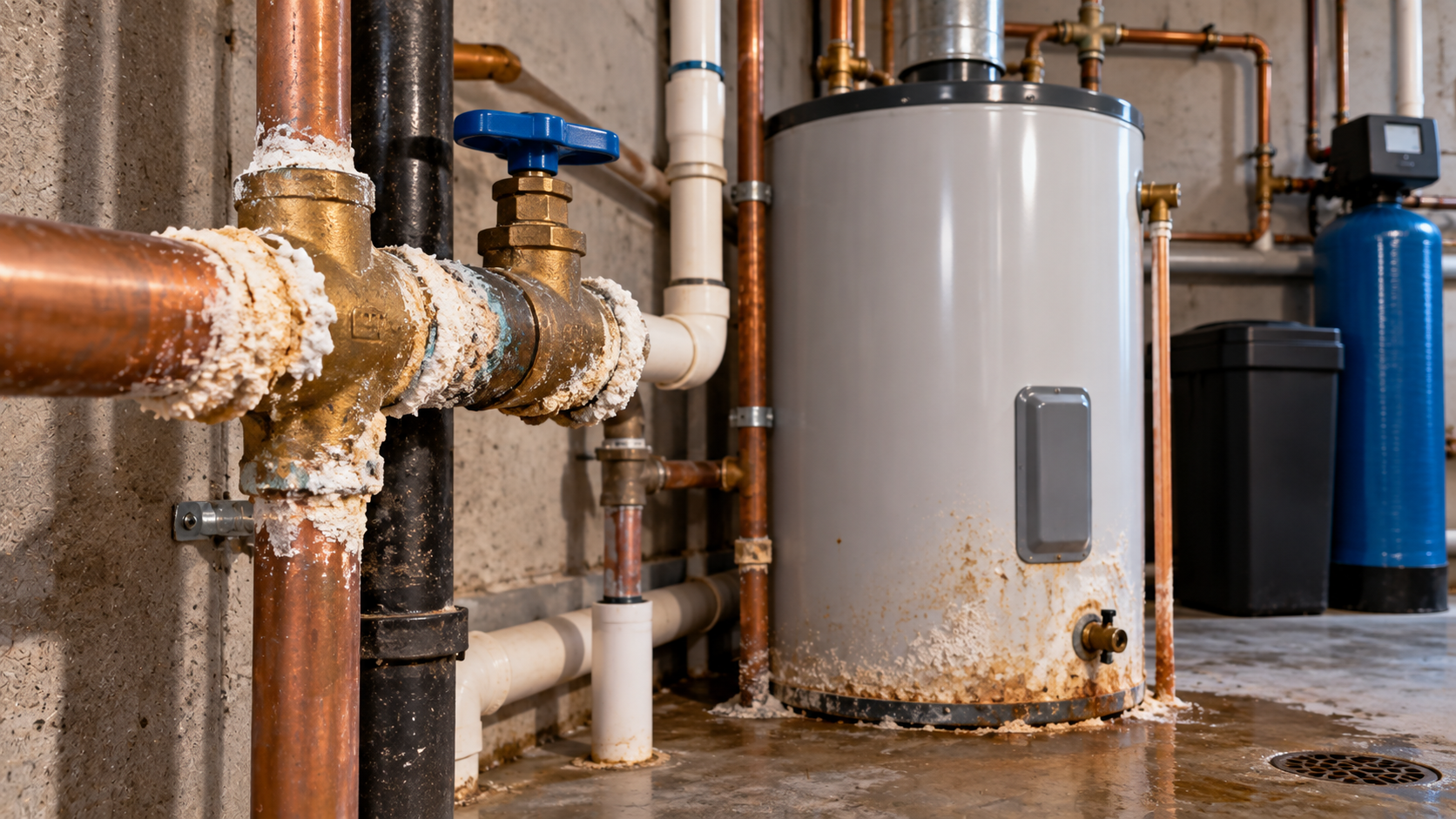
White crust on the showerhead, spots on freshly washed glasses, and soap that never seems to lather are easy to shrug off. They are also some of the first hard water problems homeowners notice, and they hint at what is happening where you cannot see it: inside your pipes, faucets, and water heater.
Hard water is simply water with a high level of dissolved minerals, mostly calcium and magnesium. The U.S. Geological Survey explains that these minerals come from the rock and soil water passes through, and that they leave scale behind when water is heated or evaporates. Most Metro Detroit homes on municipal water fall in the moderately hard range, while homes on private wells, common in parts of Livingston County, often deal with much harder water.
What Hard Water Does Inside Your Plumbing
Scale does not form overnight. It builds a thin layer at a time, which is why hard water damage usually shows up years after it starts.
Mineral Buildup in Pipes
As hard water flows through your plumbing, minerals slowly cling to the inside walls of the pipes. Over time that coating narrows the opening, which can lower water pressure and make it easier for clogs to form. Older galvanized steel pipes, still found in many older Metro Detroit homes, are especially prone to this kind of buildup.
Faucets, Showerheads, and Fixtures
Aerators and showerheads have tiny openings, so they are usually the first place scale causes trouble. You may notice a weaker spray, water shooting in odd directions, or a crusty ring around the drain. Minerals can also wear down the seals and cartridges inside faucets, leading to drips that come back even after a repair.
Appliances That Use Water
Dishwashers, washing machines, and ice makers all have valves and heating elements that collect scale. Hard water effects on appliances often show up as cloudy dishes, stiff laundry, or equipment that wears out sooner than expected.
Why Your Water Heater Takes the Biggest Hit
Of everything in your home, the water heater tends to suffer the most from hard water. Heat speeds up how quickly minerals separate from water, so every time your tank heats a fresh supply, a little more sediment settles at the bottom.
That sediment layer sits between the burner or heating element and the water. Your water heater has to run longer to heat through it, which wastes energy and raises your utility bills. You may also hear popping or rumbling sounds as water trapped under the sediment boils and bubbles up.
Left alone, hard water and water heater damage go hand in hand. Sediment can overheat the bottom of the tank, wear out heating elements, clog the drain valve, and shorten the life of the unit. Tankless water heaters are affected too, since scale can build up in their heat exchangers and trigger error codes or reduced flow.
Signs of Hard Water in Your Home
Before you invest in any fix, it helps to know what to look for. These are the most common signs of hard water:
- White or chalky residue: Crust forms on faucets, showerheads, and glass shower doors.
- Spotty dishes and glassware: Items come out of the dishwasher cloudy, even with a rinse aid.
- Dry skin and dull hair: Soap does not rinse away cleanly after a shower.
- Popping sounds from the water heater: Sediment at the bottom of the tank makes noise as it heats.
- Lower water pressure: Flow drops over time as scale narrows pipes and fixtures.
If you notice two or more of these, hard water is likely a factor in your home, and it is worth addressing before it shortens the life of your plumbing and water heater.
How to Protect Your Plumbing from Hard Water
The most effective long-term fix is treating the water before it reaches your pipes. Water softener benefits include less scale on fixtures, a longer-lasting water heater, and appliances that run more efficiently. Softeners work by swapping out the calcium and magnesium that cause buildup, and professional water treatment can pair softening with filtration if taste or odor is also a concern.
Regular upkeep matters too. Flushing your tank once a year clears out sediment before it hardens, and a technician can check the anode rod and valves while they are there. If your unit is already struggling, it may help to review the signs it’s time to replace your water heater before investing in another repair, or explore your options for water heater services.
Stop Hard Water Before It Costs You More
If scale, spotty dishes, or a noisy water heater have become part of daily life, AJ Danboise Plumbing, Heating, Cooling & Electrical can help. Our plumbers can check your water heater for sediment damage, handle repairs or replacement, and walk you through softener and filtration options with an upfront price before any work begins. Schedule a plumbing appointment online and protect your home without waiting for a leak or a cold shower.
Frequently Asked Questions
Yes. Hard water leaves mineral sediment at the bottom of the tank, which makes the water heater work harder, raises energy use, and can shorten its lifespan. Annual flushing and a water softener are the best ways to limit that damage.
Most manufacturers recommend flushing a tank water heater at least once a year. In homes with very hard water, such as those on private wells, flushing every six months can help keep sediment from hardening in the tank.
Hard water can narrow pipes with mineral buildup, wear out faucet seals and valves, and clog showerheads and aerators over time. The damage is gradual, so treating your water early helps your plumbing last longer and avoids repairs later.

Written By AJ Danboise Son Inc.
Fourth-generation family-owned. Serving Metro Detroit with HVAC, plumbing & electrical since 1925.