Table of Contents
A backup generator is worth it for many Michigan homes, especially if you rely on a sump pump, work from home, or have someone in the house who depends on powered medical equipment. A standby generator turns on by itself within moments of an outage and keeps your furnace blower, refrigerator, sump pump, and lights running until the grid comes back. For homes where a few days without power would mean a cold house, spoiled food, or a wet basement, the value shows up the first time a winter storm hits.
How Long Winter Outages Can Last in Michigan
Michigan winter storms don’t always bring the most snow, but ice is what knocks out power. In February 2023, freezing rain coated trees and lines across southern Michigan, and more than 700,000 customers statewide lost power, with utilities warning that restoration would take several days.
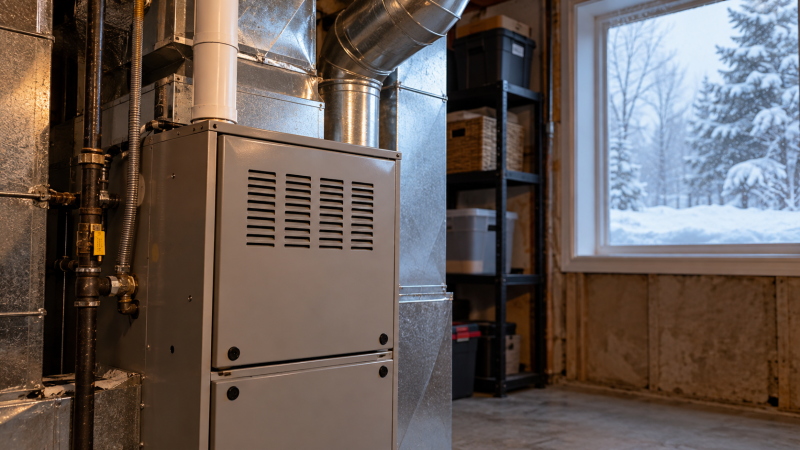
That kind of outage hits harder in January than in July. A gas furnace still needs electricity to run its igniter, controls, and blower, so losing power usually means losing heat. Mature trees over neighborhood lines, heavy wet snow, and ice-coated branches make suburban streets across Metro Detroit especially vulnerable.
What a Backup Generator Does During an Outage
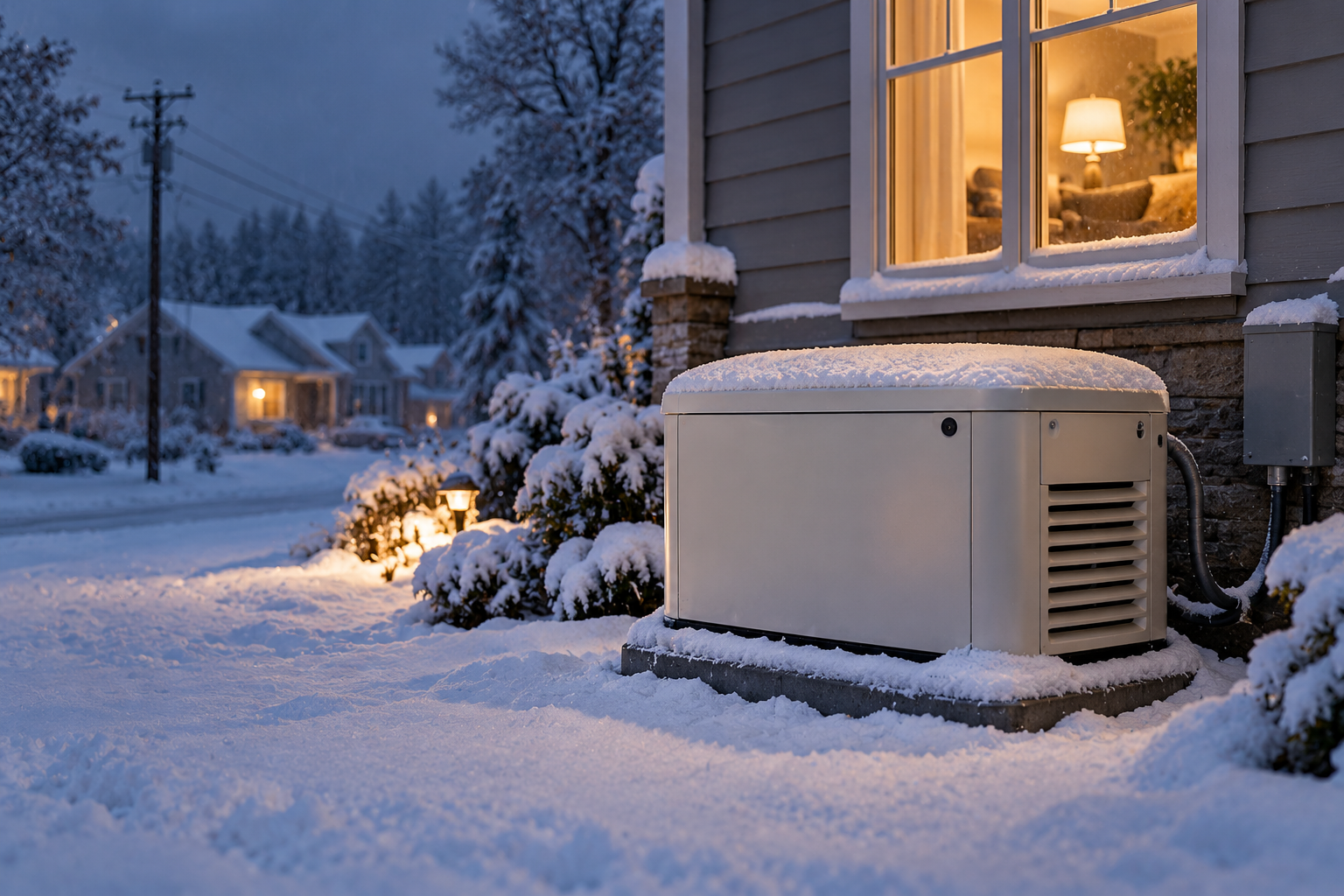
A backup generator is an engine that produces electricity when utility power fails. Standby models sit outside on a pad, run on natural gas or propane, and connect to your home through an automatic transfer switch.
When the transfer switch senses an outage, it starts the generator and moves your circuits over to generator power, usually in under a minute. When utility power returns, it switches back and shuts the generator down. You don’t have to go outside in a storm, fill a tank, or run extension cords through a window.
Standby vs. Portable Generators
Portable generators cost less up front and can power a few essentials, but they come with real tradeoffs in winter. Someone has to set them up in the cold, keep them fueled, and run cords or use a manual transfer switch to reach the furnace or sump pump.
Safety is the bigger concern. The U.S. Consumer Product Safety Commission says portable generators should run outside only, at least 20 feet from the house, and never in a garage, basement, or shed, even with doors open. Carbon monoxide alarms on every level are a must either way.
A standby generator avoids most of those problems because it’s permanently installed outdoors, wired to the house, and fueled by an existing gas line or propane tank.
Sizing a Generator for Your Home
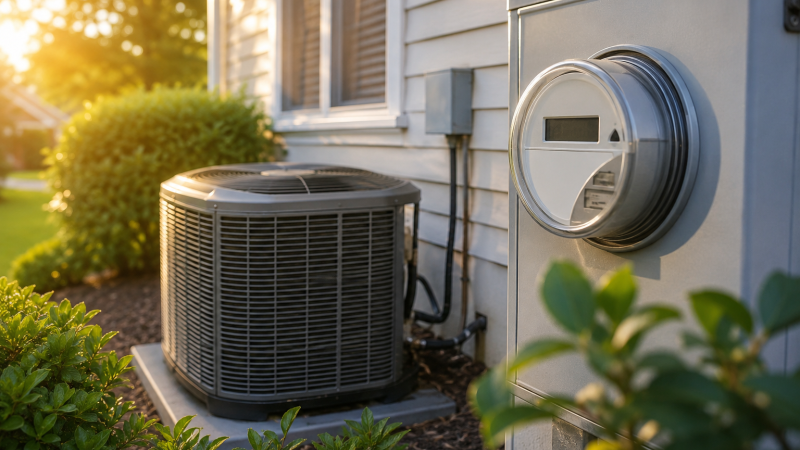
The right size depends on what you want to run. Some homeowners cover only essentials like the furnace, sump pump, refrigerator, and a few circuits, while others choose a whole-house unit that runs nearly everything, including central air in summer.
Many electricians follow the 80% rule: plan for the generator to carry no more than about 80% of its rated capacity during normal use, which leaves headroom for motors that draw extra power at startup. That headroom is the starting point when you size a home generator, along with confirming your electrical panel can support the new connection.
When a Backup Generator Makes the Most Sense
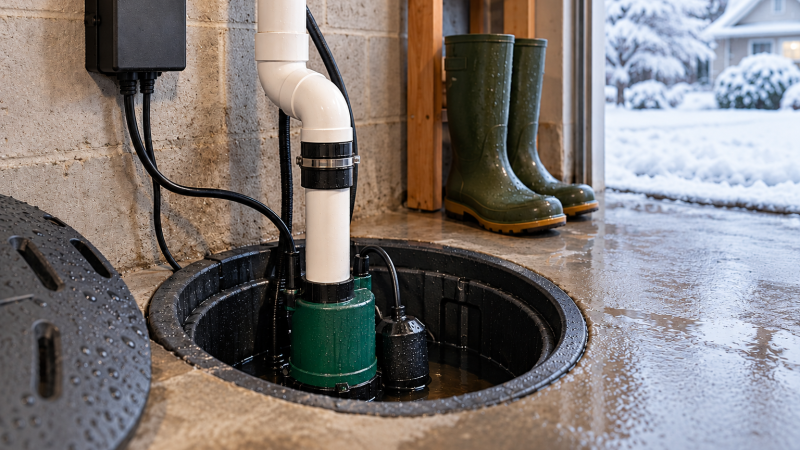
A generator pays off most when an outage puts something important at risk. A sump pump is the clearest example, since the storms that cut power are the same ones that send water toward your foundation, and a battery backup may not last through a multi-day outage. Keeping your sump pump running through an outage is often the strongest single reason to add standby power.
Homes with a home office, a finished basement, a freezer full of food, or an older family member who needs a warm house through the night also get a lot of value from standby power. If your area loses power only rarely and briefly, a smaller essentials-only unit may be the better fit.
Plan Your Backup Power Before Winter
AJ Danboise Plumbing, Heating, Cooling & Electrical installs natural gas, propane, and diesel standby generators, including Generac models, for homes across Metro Detroit. Our electricians help size the generator, confirm your panel can handle it, and give you an upfront price before any work begins, with financing available on approved credit. Schedule a generator installation online and get it in place before the next ice storm.
Frequently Asked Questions
Many homes can cover essentials like the furnace, sump pump, refrigerator, and lighting with a mid-sized standby unit, while larger homes running central air and electric appliances need more capacity. The answer comes from adding up the wattage of everything you want powered at the same time, including startup surges. An electrician can measure your loads and check your panel before recommending a size.
Installed cost depends on the generator’s capacity, fuel type, the distance to your gas meter and electrical panel, and whether the panel needs upgrades. Permits, the concrete pad, and the transfer switch also affect the total. Getting a flat-rate quote based on your actual home is the most reliable way to compare options.
For most Michigan homes, an automatic standby generator on natural gas is the most dependable backup because it starts by itself and doesn’t need refueling during a long outage. Battery storage and portable generators can cover shorter outages or fewer circuits. The best choice depends on how long outages tend to last where you live and what you need to keep running.

Written By AJ Danboise Son Inc.
Fourth-generation family-owned. Serving Metro Detroit with HVAC, plumbing & electrical since 1925.