
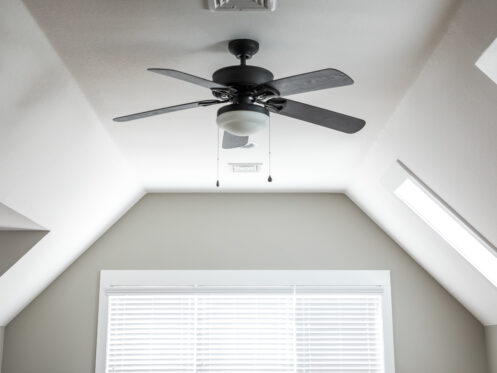
Ceiling fans improve comfort in every season. In summer, they move air across your skin and help rooms feel cooler. In winter, they help circulate warm air in the room. This supports better airflow and may help reduce strain on your HVAC system. Like other household fixtures, fans wear down over time. Loose parts, blade damage, and wiring problems can all affect performance.
Some problems start small and grow worse with regular use. A light wobble can turn into a noticeable shake. A soft click can turn into constant noise. In other cases, the problem involves wiring or the mounting box above the fan. Knowing what to watch for helps you act early and avoid bigger repairs later.
Ceiling Fan Wobbling
Ceiling fan wobbling is one of the most common complaints homeowners report. When the blades stop spinning in a smooth path, the fan starts to shake. Even a small imbalance can create movement problems. As the fan keeps running, vibration places more stress on screws, brackets, and the motor housing.
Common causes include:
- Loose mounting bracket
- Loose blade screws
- Dust buildup on the blades
- Warped or bent blades
- Blade imbalance
Loose Mounting Bracket
The mounting bracket secures the fan to the electrical box in the ceiling. If the screws loosen, the whole fan assembly shifts as the blades turn. This creates a visible shake and adds stress to the support system.
The electrical box also matters. Some homes still have light boxes where a fan-rated box should be used. A light box may not support the weight and movement of a fan. An electrician should inspect the bracket and box if the wobble keeps coming back.
Loose Blade Screws
Each blade connects to the fan with screws. Over time, normal vibration can loosen them. When one blade shifts out of place, the fan falls out of balance.
This problem often has a simple fix. Turn off the power, check each screw, and tighten any loose hardware. If the fan still shakes after that, another issue is likely causing the movement.
Dust and Debris
Dust can change the weight of the blades. If buildup collects unevenly, one blade becomes heavier than the others. This can cause an off-balance spin, especially at higher speeds.
Cleaning helps more than many homeowners expect. Turn the fan off, then wipe each blade. Removing dust and debris often improves both balance and airflow.
Warped or Bent Blades
Blade shape affects how air moves and how the fan spins. If one blade bends, warps, or droops, the fan may no longer rotate evenly. Moisture, age, and accidental impact often cause this problem.
You may be able to replace one damaged blade on some models. On older units, full replacement may make more sense. A professional inspection can help you decide which option fits your setup.
Blade Imbalance
Fans can also drift out of balance through normal wear. Small differences in blade angle or weight add up over time. Many units come with a balancing kit that uses small adhesive weights.
If you still notice your ceiling fan wobbling after tightening screws and cleaning the blades, the fan likely needs balancing. An electrician can test the blade positions and make small corrections to restore smoother operation.
Ceiling Fan Clicking
Ceiling fan clicking is another issue homeowners notice right away. The sound usually repeats with each rotation. In a bedroom or living room, even a small click can become disruptive. Most of the time, the source is mechanical, not electrical.
Common causes include:
- Loose screws
- Blade contact with the housing
- Loose parts in the light kit
Loose Screws
Loose screws are a common source of noise. Blade screws, trim screws, and housing screws can loosen over time. As the fan spins, the loose part may tap against nearby metal or glass.
Check the hardware one section at a time. Tighten the blade screws first, then inspect the housing and trim pieces. A full inspection often resolves the noise without a larger repair.
Blade Contact With the Housing
A blade that sits too high or too low may hit the housing or the light fixture. This creates a repeated click or knock during each full turn. Even slight contact can cause a noticeable sound.
Turn the fan off and rotate the blades by hand. Watch the spacing around the housing and light kit. If one blade passes too close, the blade arm or blade itself may need adjustment.
Loose Light Kit Parts
If your fan has a light kit, the sound may come from the glass shades, bulbs, or mounting parts. Loose pieces can vibrate as the fan runs. The result may sound like a click, a tick, or light tapping.
Remove power before checking the light kit. Tighten the shades and mounting hardware carefully. If a bulb is loose, secure it without overtightening. Small adjustments often stop the ceiling fan from clicking.
When the Problem Is Electrical
Some fan issues involve wiring or motor components instead of loose hardware. These problems need attention because they can affect safety. A fan with electrical trouble should not be ignored.
Watch for these warning signs:
- Fan starts and stops on its own
- Buzzing or humming from the motor
- Burning smell
- Fan mounted to the wrong ceiling box
- Light flickers when the fan runs
These signs can point to loose wiring, a failing capacitor, or a worn motor. A fan mounted on the wrong box can also create a serious support issue. If you notice any of these problems, schedule electrical repair service as soon as possible. Prompt service helps protect your home and restore safe operation.
Repair or Replace?
Not every fan problem requires replacement. Tightening hardware, balancing blades, or correcting a wiring issue can often solve the problem. Ceiling fan repair is usually the better choice when the fan is newer and the motor is still functioning properly.
Replacement may make more sense when the motor is failing, the fan is outdated, or the unit was installed on the wrong box. In those cases, professional ceiling fan installation provides a safer setup and more reliable performance. Proper installation also helps reduce future wobbling and noise issues.
Contact Us for Your Electrical Needs
AJ Danboise Plumbing, Heating, Cooling & Electrical provides ceiling fan repair service for Farmington Hills, MI, and nearby areas. We also provide ceiling fan installation. You can also schedule service for electrical repair, electrical panel replacement, and other residential electrical services.
If your current fixture needs replacement, we can help with installation and other electrical needs. Contact us today to schedule an inspection and get your fan working the way it should.