
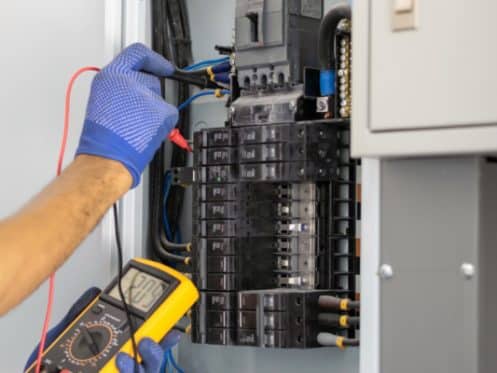
Home electrical work can look simple until a small mistake turns into sparks, tripped breakers, or a scorched outlet. It’s important to know when to hire a licensed electrician for your electrical needs. At AJ Danboise Plumbing, Heating, Cooling & Electrical, in Farmington Hills, MI, we help with projects that require testing, permits, and trained hands.
Repeated Breaker Trips
A single breaker trip during a storm is common. A second or third trip on the same circuit usually means something is wrong. The safest move is to leave the breaker off and call a professional. Don’t shuffle appliances to other outlets on the same circuit, and never install a larger breaker. Upsizing a breaker on the same wire lets the cable overheat, drying insulation and setting the stage for arcing. A professional will test the circuit, measure load under operation, and check for weak or loose connections at outlets, junctions, and the panel.
Many trips trace back to space heaters, hair tools, or several kitchen appliances on one line. Sometimes the fault is at the panel—an aged breaker or a loose neutral lug. The fix can be as simple as replacing a device or as involved as adding a new dedicated circuit. Either way, trained experts should do the work.
Warm Outlets, Wobbly Switches, and Old Devices
An outlet should feel like the wall around it. Warmth signals a poor connection or overload. Older outlets loosen with use and create high-resistance points that heat the body. Switches that crunch or wobble have worn contacts that can arc.
Replacement seems simple until you hit box-fill limits, mixed wire sizes, and protection rules. Kitchens, bathrooms, laundry areas, garages, basements, and outdoor wiring need ground-fault protection, and many living areas require arc-fault protection. Those devices must be placed and wired correctly to protect downstream outlets.
A licensed electrician will verify an equipment grounding conductor is present, bond metal boxes, pigtail grounds and neutrals correctly, and use listed terminations. The result is a cool, tight outlet or switch that lasts—and a circuit that trips fast if a fault hits water.
Lighting, Ceiling Fans, and Box Ratings
Ceiling boxes carry more than wires—they carry weight and motion. A fan hung from a box not fan-rated can loosen and shake the whole assembly. Insulation around recessed lights can trap heat if the housing isn’t IC/ICAT-rated. Heat can scorch shades and start slow failures that show up as faint smells on warm days. Modern dimmers must match the fixture and driver type (LED/ELV/MLV) or they cause flicker and excess heat.
A professional will confirm the box rating, add a brace if the joist span calls for it, verify bonding to the metal fan body, and set the right dimmer for the driver. Recessed lighting needs the proper can, trim, and an air seal so the attic doesn’t pull room air. These details aren’t visible from the floor—another reason a trained eye helps. You pick the look; a licensed electrician makes it safe.
Panel Work Is Never a Home Project
Panels contain live parts even with the main breaker off. The service conductors and main lugs stay energized. One slip near those lugs can be fatal. Panel mistakes affect the whole house: double-lugged breakers can overheat, and loose or corroded neutrals cause nuisance trips and hot spots. Improper neutral-ground bonding can put current on metal parts. A professional sizes breakers to the wire, labels circuits, and adds arc-fault or ground-fault protection where code requires. They’ll also advise on whole-home surge protection. If the panel is full, a pro can add a subpanel or plan a service upgrade. Your role: keep the area clear and leave the cover closed until help arrives.
Old Wiring in Need of Testing
Homes with cloth-sheathed cable, brittle rubber insulation, or aluminum branch circuits need professional attention. Cloth jackets can shed when disturbed; brittle insulation cracks at entries; aluminum expands and contracts more than copper and needs rated devices and connectors to avoid loose joints. Knob-and-tube lacks grounding and is often buried under attic insulation, where heat builds up around open runs.
A licensed electrician will evaluate with care, recommend repairs such as aluminum pigtailing with listed connectors (e.g., COPALUM or AlumiConn), replace hazardous segments, and plan safe transitions during remodels. Work may include new grounded circuits for kitchens and baths, arc-fault protection in living areas, and interconnected smoke alarms.
Kitchen and Bath Work
Water and electricity share space in kitchens and baths. Dishwashers, disposals, microwave drawers, downdraft vents, and heated floors draw current near sinks or tubs. Code requires ground-fault protection, correct box placement, and circuits sized to the load—often including two 20-amp small-appliance circuits for kitchen counters and a dedicated 20-amp bathroom receptacle circuit, with AFCI where adopted.
Many of these projects need a permit. An electrician will plan dedicated circuits for large appliances, separate small-appliance circuits for counters, and a safe, accessible layout for switches and outlets.
In baths, the plan covers clearances near tubs and showers and a fan that vents outdoors—not into an attic. Mirror lights and towel warmers need careful placement so cords and water never meet. These rooms see the most daily use. A careful plan and licensed work keep you and your family safe.
What You Can Do to Stay Safe
Unplug space heaters when you leave a room and keep clear space around them. Replace damaged cords—don’t tape them. Use extension cords only short-term and call an electrician when you need more outlets. Match bulbs to the fixture rating so heat doesn’t build up.
Keep outlets clear of drapes and bedding. Test smoke and carbon monoxide alarms monthly and change batteries when they chirp. Teach family members to pull plugs by the body, not the cord. Store a flashlight near the panel so you’re not in the dark if a breaker trips in a storm. These habits reduce stress on circuits while you wait for professional help on bigger tasks.
With Our Team, It’s Always Safety First
Electrical safety comes from skilled service where it matters. If you have flickering lights, warm outlets, frequent breaker trips, or projects like GFCI/AFCI upgrades, dedicated circuits, lighting rewires, surge protection, or a panel assessment, schedule a licensed electrician. We handle inspections, circuit diagnostics, safe outlet and switch replacement, and code-compliant upgrades so your home works the way it should.
Ready to put safety first and get reliable work done right the first time? Call AJ Danboise Plumbing, Heating, Cooling & Electrical in Farmington Hills today.